March 4, 2026
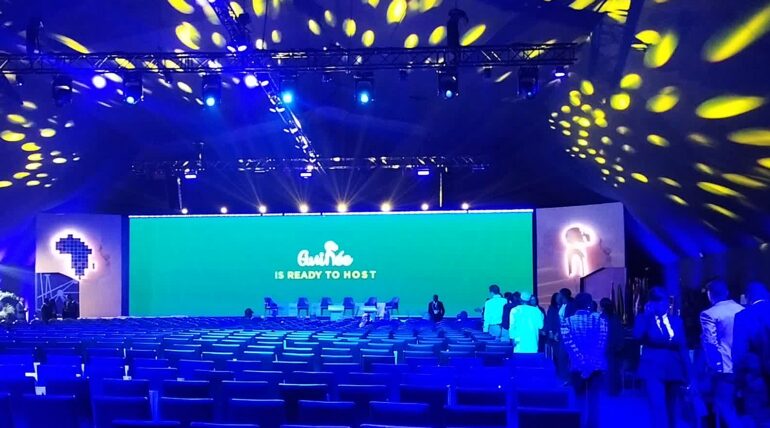
The 2025 Transform Africa Summit in Conakry, Guinea, brought together high-level delegates to discuss AI’s potential to reshape the continent’s future. Yet, as the summit buzzed with optimism and ambition, the stark contrast between the digital aspirations and on-the-ground realities, especially in countries like Guinea, raised critical questions about inclusivity, investment, and the true impact of AI-driven transformation.
Guinea Republique, a West African country where most of the population has a mobile phone connection, yet internet penetration stagnated at 26.5% in 2025. While the majority of urban residents in the capital Conakry have access to electricity, rural areas remain in darkness at night—a reality I observed firsthand when arriving by plane. It was here that Smart Africa, a pan-African alliance aiming to accelerate socio-economic development through digital technologies, chose to organize its 2025 Transform Africa Summit (TAS) under the theme AI for Africa.
Before attending, I asked myself: Did I know of any digital or AI-driven agriculture projects or startups operating in Guinea? The answer was no. A search through the Digital Agri Hub, one of the most comprehensive references for digital agriculture, confirmed my suspicion: Virtually no digital-for-agriculture initiatives exist in Guinea. Yet, I found myself at a five-day event filled with high-level talks, panels, and networking sessions about how AI could transform the lives of millions, including farmers. I couldn’t help but wonder: Were the on-the-ground realities too far removed from the infrastructure and access conditions that AI and digital transformation require? While the summit focused on the African continent as a whole, and many of its 54 countries have far more enabling environments, the context of the host country still felt significant.
My reservations about the location didn’t deter high-level delegates from attending. African presidents, ministers, and their entourages ensured their presence was noticed, with overwhelming security details that often disrupted the flow of discussions. While these details emphasized the importance of the attendees, they did little to foster effective networking or partnership building.
What emerged from the diverse sessions? Here are some key observations:
Capital and Tech Solutionism: There was much discussion about the need for long-term, contextualized investments focused on growth rather than risk. The discourse was overwhelmingly positive, centered on opportunities, potential, and growth, with frequent use of buzzwords like co-creation, inclusivity, and creativity. However, few speakers addressed the challenges, barriers, or limitations—something I found concerning.
Geopolitical Blind Spots: The summit seemed to exist in a bubble. There was almost no mention of global tensions, such as the US-China competition for AI dominance, high-risk investments, or Europe’s minimal role among global AI giants. It was as if these factors didn’t exist within the walls of the venue.
African-Led Innovation: Speakers emphasized that Africa’s digital future would be created by Africans, possibly through edge AI, Pan-African language models, or adapting European solutions. But questions remained: Which European solutions? And how would these align with investment pledges from multilateral agencies?
Amidst the noise, some sessions offered more nuanced perspectives. For example, a discussion on digital technologies, connectivity, and education highlighted the need to invest in talent, innovation, and research. Speakers stressed the importance of building AI, digital, and data skills, alongside critical reflection, in education systems. The challenge? Ensuring capacity-building keeps pace with rapid technological change while fostering real-world understanding and policy alignment.
Other sessions focused on Digital Public Infrastructure (DPI), a topic gaining traction in agriculture. Could DPI address issues like privacy, data ownership, and interoperability? Delegates from Estonia, a poster child for DPI, participated prominently in the sessions. The discussions revealed critical questions: How can DPI be designed inclusively? Who will fund its maintenance? And how can standardization avoid exclusion?
Youth Employment and AI: Five Key Takeaways
I participated in a panel on AI’s impact on youth employment, moderated by Sebastion Otte (Enabel), alongside Alexandru Cristian Mara (Nobl.AI), Davor Orlic (IRCAI, D4DHub), Ernest Mwebaze (Sunbird.ai), and Abraham Kuuku (AI Made In Africa Project). Our discussion yielded five insights:
- AI will reshape labor markets, but its impact on Africa’s youth remains uncertain. Transferable skills are essential for young people to adapt to changing employment demands.
- Africa needs AI rooted in its context: training data, models, and applications reflecting African languages, cultures, and diversity. This is where real opportunities lie and not in content moderation, with its ethical and operational challenges.
- Humans remain irreplaceable. Trust, intermediation, and personal relationships can’t yet be automated. Human oversight is critical for safe, fair, and useful AI deployment.
- Not everyone can or should become an AI developer or data engineer. Many jobs, like farming, won’t be fully replaced by AI soon. The focus should extend beyond tech-sector opportunities to solving real problems in other sectors.
- AI’s role in Africa must prioritize problem-solving over hype. For youth, this means leveraging AI to address challenges in agriculture, healthcare, and beyond—not just chasing digital jobs.
All in all, the Transform Africa Summit provided our project an opportunity to engage with other experts, practitioners, and advocates of AI, and to learn about the AI ambitions, interests, and investment strategies of African nations, bilateral and multilateral partners, and implementing organizations.
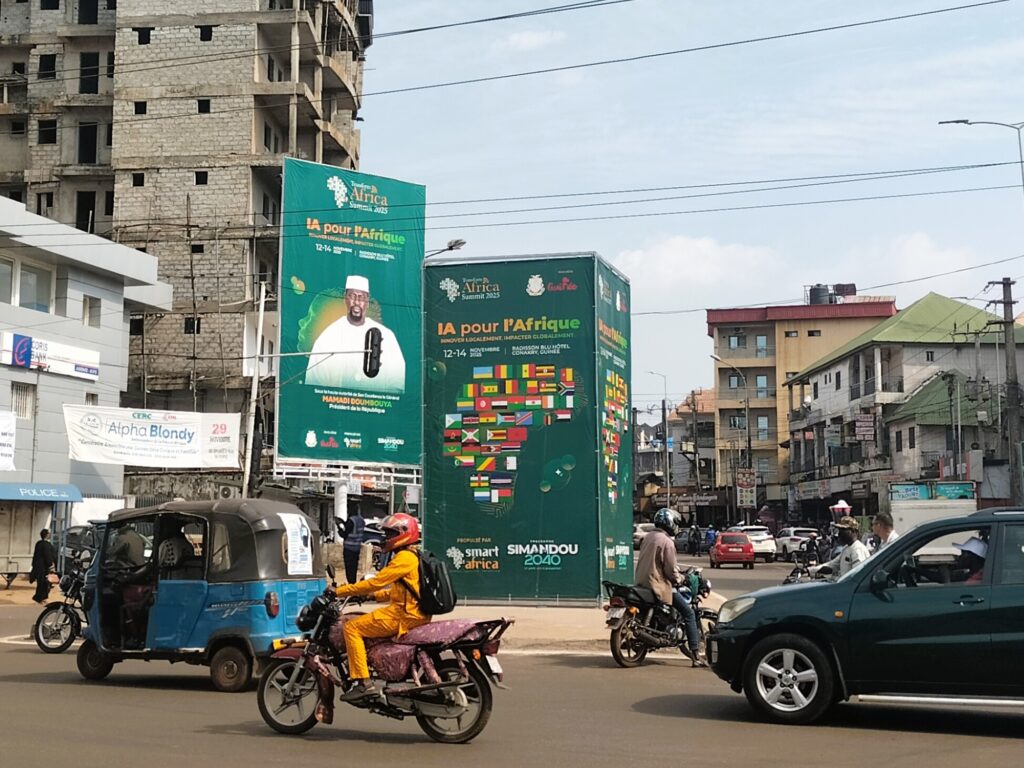
And outside? Life in Conakry continued as usual, seemingly unaffected by everything going on behind the walls of the Radisson Blu Hotel. For most, the summit’s discussions were distant from the daily struggle to earn a living. While AI will undoubtedly impact Guinea, if not today then tomorrow, it does not yet put food on the table.
About the author: Dr. Mariette McCampbell is UMRI’s lead social scientist, specializing in inclusive and responsible digital development, participatory design, and innovation trajectories. Her work spans digital agriculture and technology adoption in the Global South. In November 2025 she attended the Transform Africa Summit that was organized by Smart Africa in Conakry, Guinea Republique.
Disclaimer: The content of this blog was authored by Dr. Mariette McCampbell and reflects her observations and opinions, with editorial support from an AI assistant (Le Chat by Mistral.ai) for refining clarity and structure.